


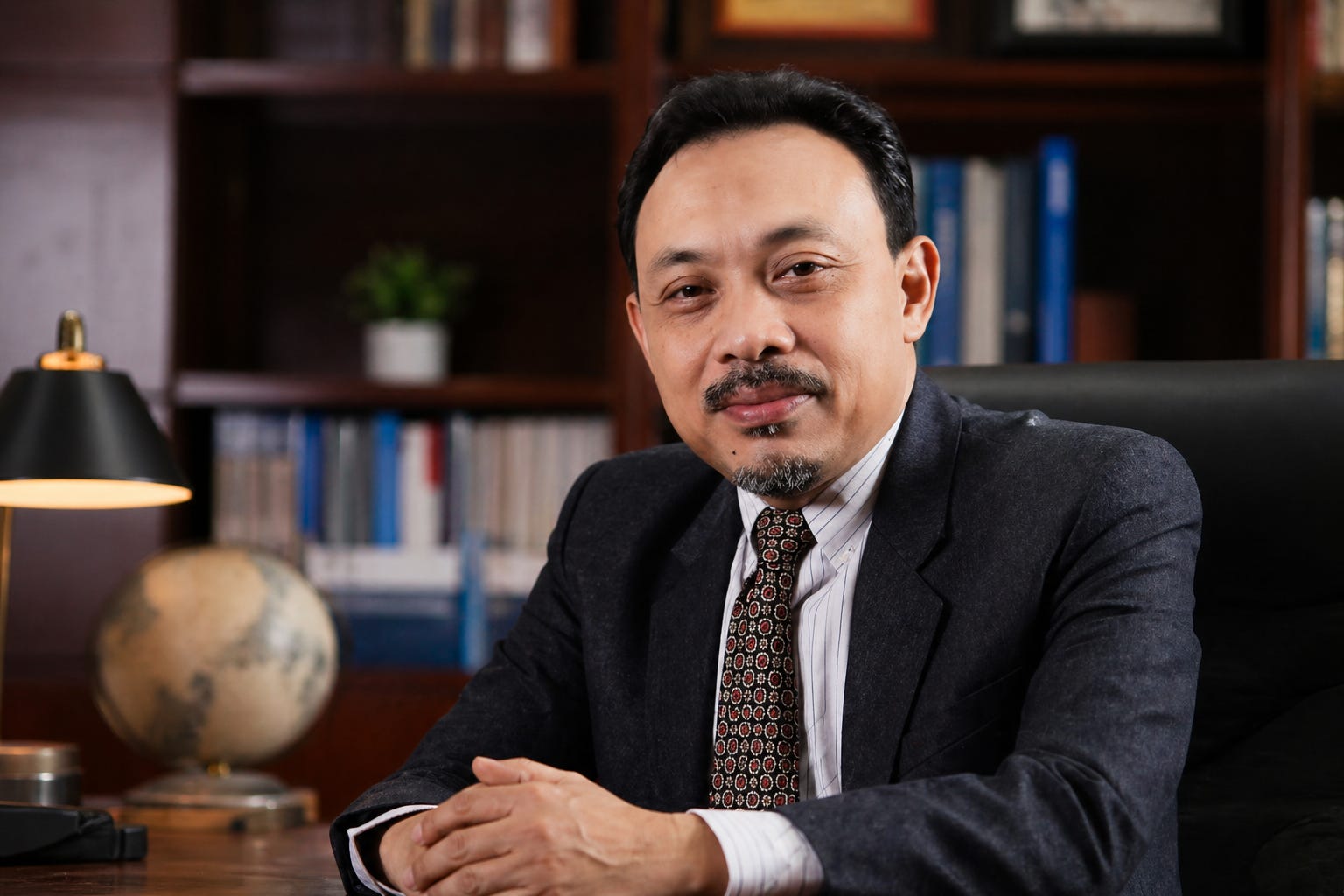
I consider myself fortunate to have graduated as a Civil Engineer from University of Malaya in 1972. Like many engineers at the time, I faced an important decision early in my career—where to begin. That decision, I believe, plays a significant role in shaping one’s professional future.
While I had the option of joining government service such as the Public Works Department, I chose instead to pursue a broader learning experience in the private sector. I joined an engineering consultancy, Perunding Bersatu Sdn. Bhd., where I was exposed not only to design but also to project supervision. Much of my learning in project management came from navigating real projects with limited guidance—relying on observation, practical experience, and common sense to build my understanding.
Building Knowledge Beyond Engineering
Although I became a Professional Engineer in 1978, I realised that my understanding of project management was still incomplete. This led me to pursue further studies at the Malaysian Institute of Management and later an MBA from Ohio University.
While these programmes strengthened my foundation in management, finance, and organisational behaviour, they did not directly address project management as a specialised discipline. Nevertheless, they provided valuable insights—particularly in financial decision-making. For instance, understanding how to treat major capital investments over multiple projects can significantly influence a contractor’s competitiveness in tendering.
Owning Projects: Lessons from Practice
In 1980, I joined Malaysian Agricultural Research and Development Institute as Chief Engineer. For the first time, I was given full responsibility to deliver projects from inception to completion.
It was during this period that I learned one of the most important lessons in project management: cash flow is the lifeblood of projects. I made it a priority to ensure that contractor payments were not delayed, even if minor discrepancies existed. Maintaining momentum was often more critical than achieving perfect accuracy.
This approach proved effective—not only in keeping projects on track but also in building trust. In one instance, when a contractor brought a case to the Asian International Arbitration Centre, our consistent payment practices contributed to a successful outcome.
Expanding Scope: Environment and Responsibility
By the 1990s, it became clear that project management must also address environmental considerations. To deepen my understanding, I attended a specialised programme at Loughborough University of Technology, focusing on environmental aspects of project preparation.
This experience reinforced my belief that project managers must balance not only time, cost, and quality, but also the environmental impact of their projects.
Shaping National Standards
A major turning point in my career came with the establishment of Construction Industry Development Board Malaysia in 1996, where I served as General Manager.
During my tenure, I was given the responsibility to develop competency standards for construction personnel. This led to the creation of the National Competency Standards (NCS) for Construction Project Managers in 2002. The NCS was designed to emphasise competency over academic qualifications, aligning with global frameworks such as those from the International Labour Organization.
Professionalisation Through Training
The NCS became the foundation for the Certified Construction Project Manager (CCPM) programme. This certification was structured to assess both knowledge and real-world performance, ensuring that project managers are evaluated not just on theory but on their ability to deliver results.
The response from the industry was encouraging, with thousands of project managers registering under CIDB. This marked a significant step towards professionalising project management in Malaysia.
The Birth of ACPM
As the CCPM programme gained traction, it became evident that there was a need for a dedicated professional body to represent project managers. In 2012, I was involved in establishing the Association of Construction Project Managers Malaysia, where I served as its first Secretary-General.
We envisioned ACPM as a platform to safeguard the interests of project managers, ensure continuous professional development, and keep pace with global advancements in the field. Our motto, “Agent of Change for a Productive Malaysia,”, reflects this aspiration.
Legal Recognition and Responsibility
Over time, the role of project managers gained formal recognition through amendments to the Uniform Building By-Laws (UBBL), which require registered project managers to certify key construction works through G-Forms.
This development elevated the profession, placing greater responsibility and accountability on project managers in ensuring compliance and quality.
Towards a Professional Board
With increased responsibility comes the need for proper governance. I strongly believe in the establishment of a Board of Project Managers Malaysia—a body that can regulate professional conduct, enforce standards, and provide disciplinary oversight.
We have engaged with CIDB and the Ministry of Works on this matter, and while progress has been made, the journey towards full professional recognition continues.
Looking Ahead
Project management is not a static profession. It must continue to evolve alongside advancements in technology, including AI, as well as increasing demands for sustainability and efficiency.
To remain relevant, project managers must embrace continuous learning, adopt digital tools, and strengthen collaboration across the construction value chain.
Looking back, I often reflect that if structured programmes like CCPM had existed when I began my career, it would have significantly accelerated my journey.
Today, the foundation has been laid for future generations. The challenge now is to build on it—ensuring that project managers continue to play a leading role in delivering projects that drive productivity, innovation, and national development.